To disable Bluetooth on your soundbar, start by checking the settings menu, as most brands provide this option. For Sony soundbars, press the TV button and navigate to Bluetooth settings. On Samsung models, press and hold the Bluetooth button until the symbol disappears. LG soundbars also feature Bluetooth control within the settings menu. However, Vizio and Roku soundbars do not allow for a complete Bluetooth disable; instead, you will need to unpair any connected devices. It’s important to keep your firmware updated for security and performance improvements. Explore additional tips and methods for different brands to optimize your audio experience.
Key Takeaways
- Access the soundbar’s settings menu and look for Bluetooth options to disable it, as most brands provide this feature.
- For Sony soundbars, press the TV button on the remote to find Bluetooth settings for disconnection.
- Samsung soundbars can disable Bluetooth by holding the Bluetooth button on the remote until the symbol disappears.
- Vizio and Roku soundbars don’t allow Bluetooth deactivation; instead, manage connections by unpairing devices from the settings.
- Regularly check Bluetooth status and update firmware to enhance security and performance, preventing unauthorized connections.
Understanding Bluetooth Functionality on Soundbars
When you’re streaming audio through a soundbar, understanding Bluetooth functionality is vital for optimizing your experience. This feature allows you to wirelessly connect devices like smartphones, tablets, and TVs, enhancing your playback options.
However, some soundbars, such as the Vizio 2.1 Theater Sound Bar, don’t allow you to disable Bluetooth, which raises concerns about unauthorized access. The Bluetooth light indicator shows pairing status, with a flashing light signaling pairing mode.
Keep in mind that active Bluetooth can interfere with other audio inputs, so regularly checking your settings and monitoring connected devices is essential for maintaining security and enjoying uninterrupted sound from your soundbar.
Methods to Disable Bluetooth on Various Brands
When it comes to disabling Bluetooth on soundbars, methods can vary widely by brand.
You’ll often need to check the settings menu or user manual for specific instructions tailored to your soundbar model.
Understanding common techniques and troubleshooting tips can help you manage Bluetooth functionality effectively, ensuring you get the best audio experience from your soundbar.
Brand-Specific Instructions
If you want to disable Bluetooth on your soundbar, the process varies by brand, so it’s essential to follow the specific instructions for your model.
For Sony soundbars, use the remote to access the settings menu and disable Bluetooth in the Bluetooth section.
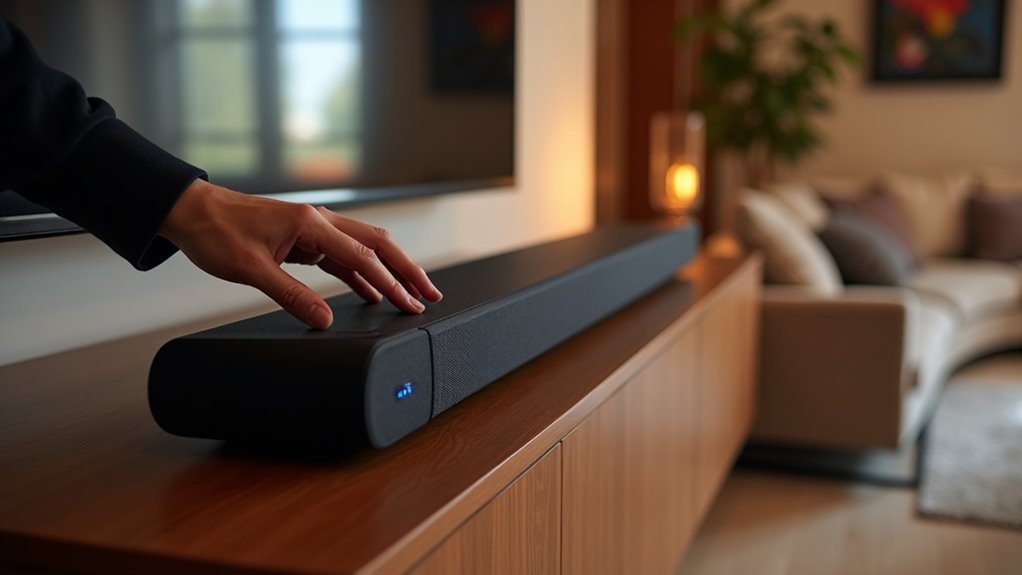
Samsung soundbar users can press the Bluetooth button on the remote until the Bluetooth symbol disappears.
LG soundbars allow you to turn off Bluetooth via the settings menu.
Unfortunately, Vizio and Roku soundbars don’t allow Bluetooth to be disabled; instead, you can manage connections by unpairing devices.
Always refer to your soundbar’s manual for specific instructions regarding your Soundbar with Wireless Subwoofer.
Common Disabling Techniques
Disabling Bluetooth on your soundbar can be a straightforward process, depending on the brand and model you own.
Most soundbars allow you to turn off Bluetooth through the settings menu, which can be accessed via the remote or the soundbar interface. For Sony models, you can press the TV button on the remote, then navigate to Bluetooth settings to disconnect or disable it.
Some brands may require a specific button combination, such as holding the Bluetooth button for a few seconds. If you’re unsure how to proceed, consult the user manual for your specific model.
Additionally, it’s a good practice to check regularly to ensure Bluetooth is turned off, especially if your soundbar features a standby mode.
Troubleshooting Bluetooth Issues
Bluetooth connectivity issues can arise even after you’ve successfully turned it off.
For Sony soundbars, press the TV button on your remote to confirm disconnection in the settings.
Vizio soundbars don’t allow complete Bluetooth shutdown, which may cause interruptions.
Many Roku models lack a disabling option, resulting in persistent background connectivity.
If you have a Creative soundbar, you can disable Bluetooth by changing the input or powering off the device.
For Samsung or LG soundbars, refer to the user manual for precise instructions on managing Bluetooth settings.
Always check your specific soundbar model’s guidelines for troubleshooting.
Importance of Updating Firmware for Security
Keeping your soundbar’s firmware up to date is essential for ensuring its security and performance. Regular updates patch vulnerabilities that could otherwise leave your device open to unauthorized access, especially with Bluetooth features.
You can usually find firmware updates on the manufacturer’s website; just follow their instructions to download and install them. If you neglect these updates, you may face connection issues, particularly with automated functions like AutoVA.
Managing Bluetooth Standby Mode Effectively
To manage Bluetooth standby mode effectively on your soundbar, start by turning off the soundbar when you’re not using it, which deactivates Bluetooth visibility.
Regularly check the Bluetooth settings to ensure it’s not discoverable by other devices, enhancing your security.
Use the remote to cancel standby mode whenever you want to limit unauthorized connections and maintain control over your soundbar’s Bluetooth functionality.
Cancel Standby Mode
While managing your soundbar, it’s essential to ensure that standby mode is canceled to enhance security and prevent unauthorized connections.
To do this, make certain to turn off the soundbar completely, which will deactivate its discoverability. Regularly check your soundbar’s settings to confirm that Bluetooth standby mode is off after powering it down.
Additionally, monitor device connections periodically to verify that no unauthorized Bluetooth devices can connect. For added security, reinforce your Bluetooth settings and turn off the soundbar whenever it’s not actively in use.
This will help prevent any accidental pairings and keep your audio experience secure.
Turn Off Soundbar
Powering off your soundbar is an essential step in managing Bluetooth standby mode effectively. When you turn it off completely, you deactivate Bluetooth visibility, preventing your soundbar from being discoverable by other devices. This enhances your privacy and security.
Be sure to regularly check the Bluetooth settings to ensure it’s not left in a discoverable state after shutdown. If your soundbar has a dedicated Bluetooth input, switch to another input source when you’re not using Bluetooth.
Always verify that the soundbar is entirely powered down, as some models may remain partially powered and continue to maintain Bluetooth readiness.
Monitor Device Connections
Monitoring device connections is essential for maintaining the security and functionality of your soundbar’s Bluetooth features. Regularly check the list of paired devices to ensure that no unauthorized connections exist.
To enhance security, disable Bluetooth standby mode by turning off the soundbar when not in use, which prevents it from being discoverable. Additionally, review the settings to avoid automatic reconnections with previously paired devices.
Periodically confirm that your soundbar remains non-discoverable during standby. Finally, implement strong security measures, such as using robust passwords for your network, to further reduce the risk of unauthorized device connections.
Stay vigilant and secure your soundbar experience!
Preventing Unauthorized Access to Your Soundbar
To keep your soundbar secure from unauthorized access, it’s crucial to avoid leaving it on the Bluetooth input when you’re not using it. This prevents it from being discoverable by other devices.
Regularly monitor input changes to detect any unauthorized connections. If you notice unexpected changes, check your Wi-Fi security and talk to your service provider about securing your network.
Implement strong passwords, disable guest access, and use MAC address filtering to limit device access.
Finally, educate everyone in your household on recognizing unauthorized devices and the importance of maintaining soundbar security for a safer entertainment experience.
General Security Measures for Bluetooth Devices
While soundbars offer great convenience and enhanced audio experiences, it’s also important to take proactive steps to ensure your devices remain secure.
Regularly update all your connected soundbars to implement the latest features and reduce vulnerabilities. Use strong, unique passwords for your Wi-Fi networks to prevent unauthorized access.
Disabling guest access on your Wi-Fi limits the number of devices that can connect, thereby enhancing soundbar security. Additionally, consider using MAC address filtering to restrict access to specified devices.
Finally, educate yourself and others on identifying and reporting unauthorized devices to ensure prompt action can be taken to protect your soundbar functionalities.
Exploring Alternatives With Customizable Bluetooth Settings
Finding the right soundbar can significantly enhance your audio experience, particularly when it comes to managing Bluetooth settings.
Look for models that allow you to completely deactivate Bluetooth, giving you more control and protecting your privacy. Brands that offer customizable Bluetooth settings can improve your connectivity options.
Opt for soundbars that enable Bluetooth deactivation for enhanced control and privacy, along with customizable settings for better connectivity.
Additionally, consider soundbars with manual input selection to prevent accidental pairing. Research user reviews to identify models that are praised for effective Bluetooth management and minimal interruptions.
Finally, evaluate soundbars that include wired connectivity options like optical or HDMI ARC, which reduces reliance on Bluetooth and lowers potential security risks. Your audio experience deserves the best!