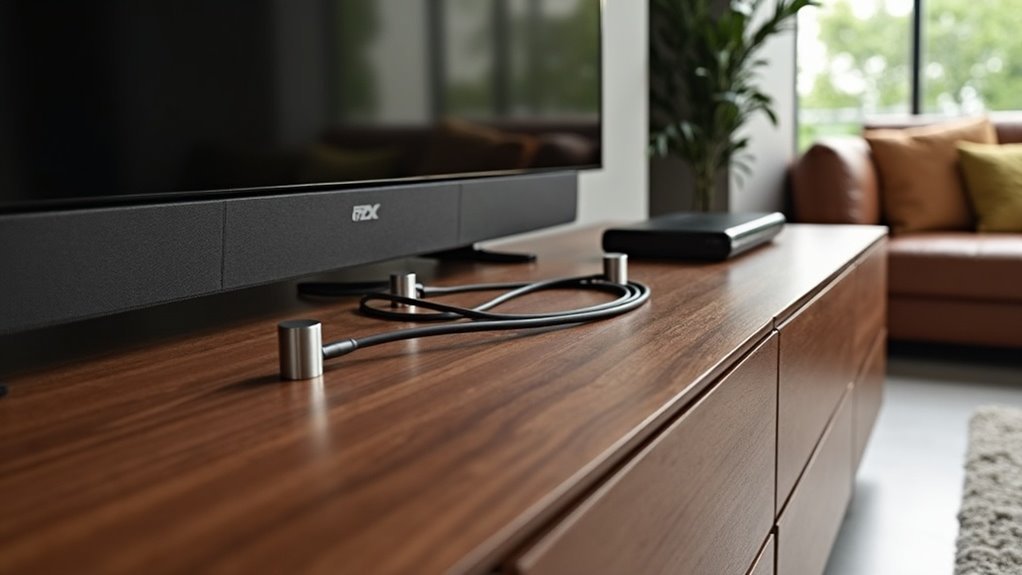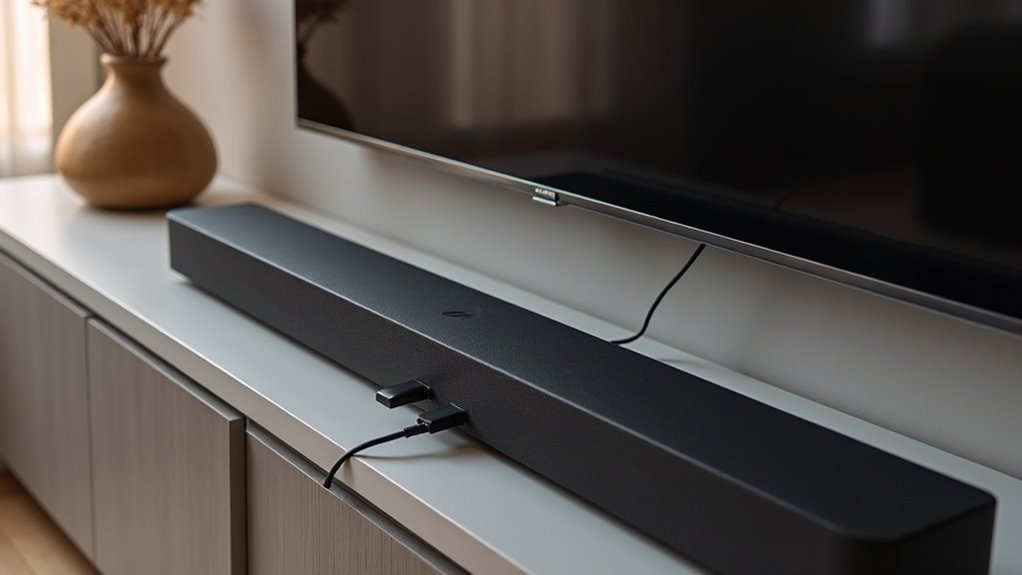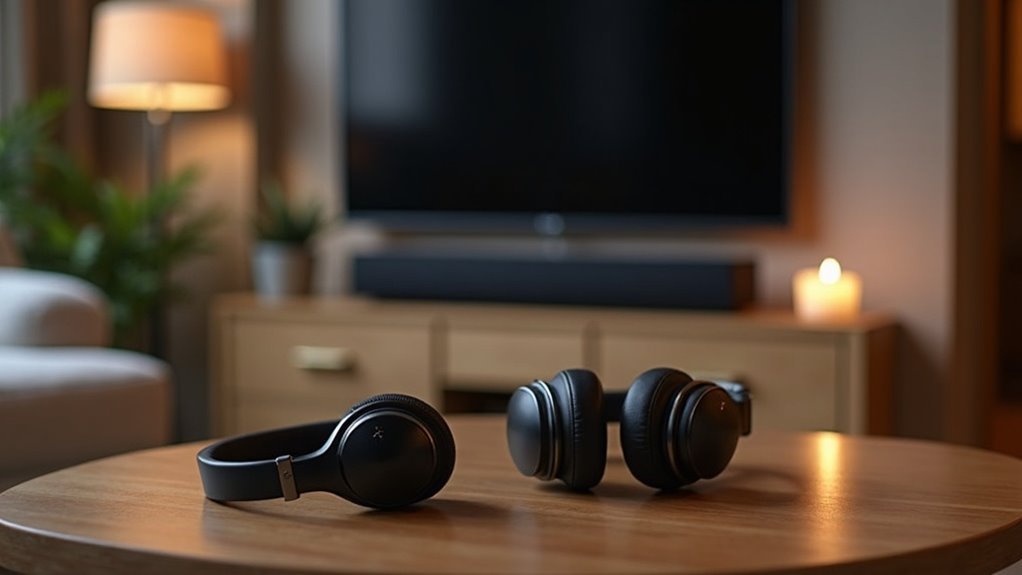
To connect your soundbar and Bluetooth headphones, first, ensure your headphones are charged and in pairing mode. Power on your soundbar and switch it to Bluetooth mode. Use an optical, auxiliary, or RCA connection to link the soundbar to your TV, and connect Oasis Plus if needed for simultaneous audio. Once paired, test the audio and adjust the volume settings for an optimal experience. There’s a wealth of information available to help you enhance your soundbar setup.
Key Takeaways
- Ensure your Bluetooth headphones are fully charged and in pairing mode before starting the connection process.
- Power on the soundbar and set it to Bluetooth mode to initiate the pairing.
- Confirm the successful pairing by testing audio output from the soundbar and adjusting the volume as needed.
- Connect your soundbar to the TV using an optical, auxiliary, or RCA cable for enhanced audio flexibility.
- Utilize a Digital Optical Audio Splitter for simultaneous connections if your TV does not support multiple audio devices.
Understanding the Oasis Plus Functionality
The Oasis Plus enhances your soundbar experience by allowing you to enjoy audio through both headphones and your soundbar or AV receiver simultaneously.
With its bypass function, you can connect your devices via optical output, ensuring crystal-clear audio without interruptions. Even when the system is powered off, it supports audio passthrough, making it easy to share one optical port among multiple devices.
Experience crystal-clear audio with the Oasis Plus, featuring seamless audio passthrough even when powered off.
For optimal compatibility, connect the Oasis Plus to your soundbar and pair your headphones. To use the bypass function effectively, ensure you employ the same connection type on both ends, whether it’s optical, auxiliary, or RCA.
Enjoy ultimate audio flexibility with your soundbar!
Preparing Your Headphones for Connection
Before connecting your Bluetooth headphones to the soundbar, ensure they’re fully charged for optimal performance.
Next, activate pairing mode on your headphones by following the manufacturer’s instructions.
Lastly, make sure your soundbar is powered on and set to Bluetooth mode to initiate the connection process.
Pairing Headphones With Device
When you’re ready to pair your Bluetooth soundbar with your device, make certain it’s fully charged and in pairing mode.
Next, access the Bluetooth settings on your TV or audio device and select “Add Device” or “Pair New Device.” This will allow your device to search for available Bluetooth soundbars.
Once your soundbar appears in the list, select it to start the pairing process, which might ask for a pairing code.
After pairing is successful, test the audio output to verify sound is coming through the soundbar, adjusting the volume as needed.
Ensuring Battery Charge Level
Ensuring your soundbar is fully charged is essential for a smooth connection and uninterrupted audio experience. Before connecting, check the power status; if it’s low, you may face performance issues.
If your soundbar has a battery indicator, use it to confirm it’s sufficiently charged for your session. Ideally, charge it for at least 1-2 hours prior to use, especially if it hasn’t been used recently.
Always use the manufacturer’s recommended charging cable and adapter for best results. To prolong battery lifespan, make it a habit to charge your soundbar after each use, keeping it ready for the next connection.
Selecting Audio Source Input
With your soundbar charged and ready, it’s time to prepare your audio setup for optimal listening. Follow these steps:
- Ensure your soundbar is fully charged and powered on.
- Access your TV’s settings menu and navigate to the audio output section.
- If using an optical connection, connect the soundbar to the TV’s optical output.
- Familiarize yourself with the audio control settings to toggle between the soundbar and other audio outputs seamlessly.
Choosing the Right Connection Type for Your TV
When you’re setting up your soundbar, choosing the right connection type is essential for optimal performance.
HDMI ARC offers great audio quality and simplifies control, making it a popular choice for soundbars.
An optical connection provides broader compatibility and can also deliver excellent sound.
Additionally, you might consider auxiliary or RCA options based on your specific setup and preferences to enhance your audio experience.
HDMI ARC Advantages
One of the best connection options for your soundbar and TV is HDMI ARC (Audio Return Channel).
Here are some advantages of using HDMI ARC with your soundbar:
- Single Cable Setup: Simplifies your installation and reduces cable clutter, making your entertainment setup neater.
- High-Quality Audio: Supports advanced audio formats like Dolby Digital and DTS, delivering an immersive sound experience that enhances your favorite movies and music.
- Unified Control: Allows you to manage both your soundbar and TV volume with a single remote, streamlining your viewing experience.
- Wide Compatibility: Many modern TVs, including popular brands like Samsung, come equipped with HDMI ARC ports, ensuring easy integration with your soundbar.
Optical Connection Benefits
If you’re looking to enhance your soundbar experience, consider connecting it to your TV using an optical connection.
This method ensures high-quality digital audio transmission, reducing signal loss and providing superior sound clarity over traditional analog options. Additionally, optical connections are generally resistant to electromagnetic interference, resulting in a more stable audio performance.
Many modern TVs, including popular models from Samsung, come equipped with optical outputs, making it easy to connect to various audio devices.
To achieve the best sound experience, just be sure to adjust your TV’s audio settings to the appropriate output format.
With optical connections, you’ll enjoy crisp, clear sound and effortless connectivity for your soundbar.
Auxiliary vs. RCA Options
After exploring the benefits of optical connections for your soundbar, it’s important to contemplate other audio output options like auxiliary and RCA connections.
Here’s a quick comparison relevant to soundbars:
- Auxiliary: A simple 3.5mm jack that’s widely compatible with many devices, making it a convenient choice for connecting your soundbar to various audio sources.
- RCA: This option features color-coded plugs (red and white for stereo audio) and can provide a solid connection for soundbars that support it.
- Audio Quality: RCA connections often deliver better sound fidelity due to dedicated channels, which can enhance the listening experience when paired with a high-quality soundbar.
- Port Availability: Your choice will depend on the available ports on your soundbar and the devices you wish to connect.
Ultimately, your decision between auxiliary and RCA options will depend on your specific soundbar setup and desired audio quality.
If you’re looking for compatibility with multiple devices, consider using a DAC to bridge any gaps.
Connecting the Oasis Plus to Your TV
Connecting your soundbar to the Oasis Plus is a straightforward process that enhances your audio experience.
Start by using an optical connection from your TV to the Oasis Plus for peak sound quality. Before you connect, be sure to pair your Bluetooth headphones with the Oasis Plus to verify they’re ready.
Once the connection is established, utilize the RX port to connect your soundbar, selecting the correct connection type—whether it’s optical, auxiliary, or RCA.
Remember to use the same connection type on both devices for the bypass function to work effectively, allowing you to easily toggle between audio sources.
Setting up the Soundbar With Oasis Plus
Setting up your soundbar with the Oasis Plus is a straightforward process that significantly enhances your audio experience.
Follow these steps for optimal setup:
- Pair your Bluetooth headphones with the Oasis Plus for convenient audio access.
- Connect the Oasis Plus to your TV using an optical, auxiliary, or RCA cable.
- Ensure the RX port of the Oasis Plus is connected to the soundbar for proper audio output.
- If utilizing optical connections, link both the TV and Oasis Plus with optical cables to enable bypass functionality.
Toggling Between Audio Sources
When you’re enjoying audio with a soundbar, toggling between different audio sources is seamless.
Simply turn off any connected Bluetooth headphones to immerse yourself in the full soundbar experience, or switch off the soundbar when you want to use your headphones.
If you’re using the Oasis Plus device, it supports simultaneous audio output, eliminating the need for constant re-pairing.
The Oasis Plus device offers simultaneous audio output, making re-pairing a hassle of the past.
To streamline your connection process, select between optical, auxiliary, or RCA inputs based on the compatibility of your devices.
For optimal toggling, ensure you maintain the same connection type when utilizing the bypass function.
This flexibility significantly enhances your audio experience, especially in multi-user environments.
Adjusting Volume Controls for Optimal Experience
To enhance your audio experience specifically with soundbars, it’s essential to manage volume controls effectively.
Here are four steps to improve your sound experience:
- Utilize a Digital Optical Audio Splitter to independently control sound levels for your soundbar and other devices.
- Connect Bluetooth audio transmitters for easy pairing of Bluetooth headphones, allowing you to make volume adjustments conveniently.
- Budget approximately $100 for both the optical splitter and Bluetooth transmitter to create a comprehensive audio solution.
- Check for software updates from your soundbar manufacturer, such as Samsung, to explore potential options for simultaneous audio output and control.
This method ensures you achieve the optimal audio balance with your soundbar setup.
Enjoying Your Enhanced Audio Setup
Enjoying your enhanced soundbar setup can greatly elevate your home entertainment experience, especially when you can seamlessly switch between your soundbar and Bluetooth headphones.
Since most TVs, like the Samsung QN75Q65FN, don’t support simultaneous connections, using a Digital Optical audio splitter, such as the J-Tech Digital Premium SPDIF TOSLINK, allows you to connect multiple audio devices.
Pair this with a Bluetooth audio transmitter, like the MEEaudio Connect, to maintain independent volume control. This setup not only addresses family volume complaints but also caters to individual listening preferences.
For about $100, you can markedly improve your audio experience at home with your soundbar.