To calibrate your soundbar for open concept layouts, position it directly below your TV, ensuring a clear line of sight. Utilize the soundbar’s auto-calibration feature to analyze room acoustics and adjust settings accordingly. Regularly check and fine-tune the equalizer settings to maintain audio balance, taking into account the impact of reflections and hard surfaces. Strategically place soft furnishings to absorb excess sound and reduce echoes. Following these steps will significantly enhance your audio experience with your soundbar, and you’ll find additional tips to optimize your setup even further.
Key Takeaways
- Position the soundbar below the TV to ensure optimal sound delivery and minimize sound dispersion in open spaces.
- Utilize the soundbar’s auto-calibration feature to analyze room acoustics and adjust EQ settings for enhanced audio clarity.
- Consider manually calibrating speaker levels and delay settings to tailor the sound to your specific open concept layout.
- Regularly reassess and adjust soft furnishings, such as cushions and acoustic panels, to reduce reflections and improve overall sound quality.
- Recalibrate your soundbar after any changes in room layout to maintain consistent audio performance in your evolving space.
Understanding Open Concept Acoustics
In open concept spaces, soundbars can encounter specific challenges due to the lack of walls that typically help contain and direct sound.
This layout can lead to sound reflections and echoes, which may compromise audio clarity and immersion. Large, uninterrupted areas cause sound to disperse widely, making it difficult for the soundbar to create a balanced soundstage.
Hard surfaces, like concrete and tile, can amplify undesirable reverberations, muddling audio quality.
To enhance your listening experience, consider strategically placing soft furnishings around the area to absorb sound and reduce reflections.
Additionally, being aware of room modes will help you address uneven bass response and potential dead spots in audio coverage, ensuring that your soundbar delivers the best possible performance in your open concept space.
Optimal Soundbar Placement
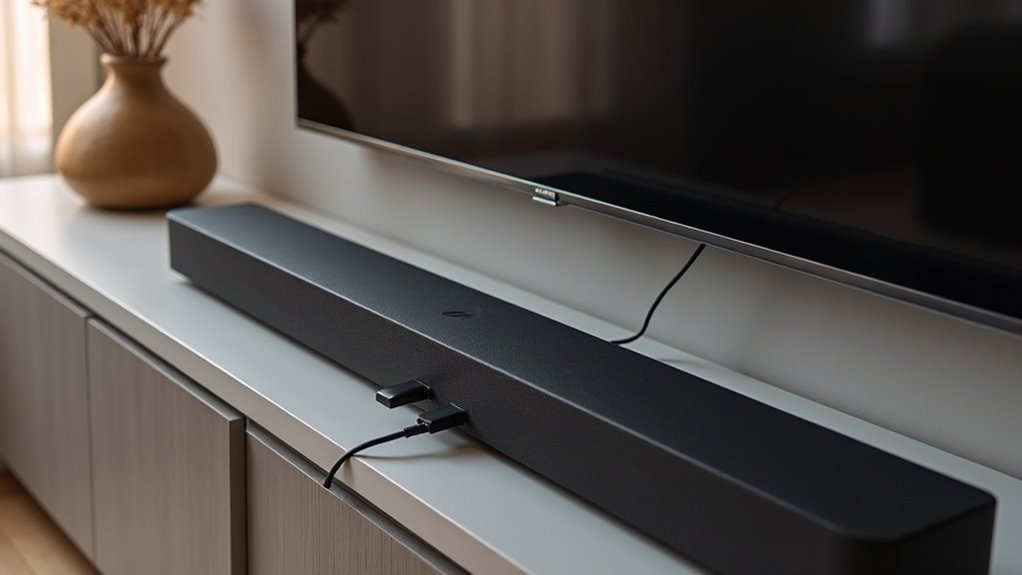
To achieve the best audio performance from your soundbar, proper placement is essential. Position the soundbar directly below your TV for ideal sound delivery, ensuring that no obstructions hinder clear audio projection.
For wall-mounted TVs, adhere to the manufacturer’s distance guidelines to maintain sound alignment and clarity. Guarantee a clear line of sight from the soundbar to the listening area, as obstructions can greatly reduce audio quality.
If space limits placing it below, consider mounting it above the TV while following the same distance rules.
Finally, position the subwoofer on the same wall, ideally in a corner, to enhance bass response in your open-concept layout.
Utilizing Calibration Features
Many modern soundbars feature advanced calibration capabilities that enhance your audio experience by adapting to the unique acoustics of your room.
Utilizing auto-calibration, these soundbars analyze room acoustics through built-in microphones, adjusting EQ settings for peak audio quality in various layouts.
For a more tailored approach, consider manual calibration, which allows you to fine-tune individual speaker levels and delay settings.
Soundbars equipped with advanced surround formats like Dolby Atmos often include specific calibration modes, enhancing the immersive experience.
Regularly recalibrating after changes in room layout ensures that sound dispersion remains clear and balanced, maximizing your listening enjoyment.
Enhancing Sound With Soft Furnishings
While you may not realize it, incorporating soft furnishings into your space can dramatically enhance your sound experience, especially when using a soundbar. These elements absorb high frequencies and reduce reverb, which is essential for open layouts with hard surfaces that can hinder sound quality. Strategically arranging plush items helps create a balanced sound environment, breaking up standing waves, improving bass response, and fostering an immersive listening experience when paired with your soundbar.
| Soft Furnishings | Impact on Sound |
|---|---|
| Rugs | Absorb high frequencies and enhance overall sound clarity |
| Acoustic Panels | Control sound reflections for optimal soundbar performance |
| Cushions & Throws | Mitigate reverb and enhance bass response from your soundbar |
Regularly reassessing your arrangement can further optimize sound quality, ensuring you get the most out of your soundbar setup.
Regular Adjustments for Consistent Audio Quality
As you enjoy your soundbar, it’s crucial to make regular adjustments to ensure consistent audio quality, especially when changes occur in your room.
Take advantage of your soundbar’s calibration features to customize settings according to your space’s unique acoustics. Regularly check and fine-tune equalizer settings to maintain a balanced sound profile that suits various content types, enhancing dialogue clarity and bass integration.
Monitor audio quality during different listening sessions, and be prepared to tweak settings as necessary. Consider scheduling a calibration assessment every few months to adapt to shifting room dynamics, ensuring that your sound quality remains immersive and tailored to your environment.