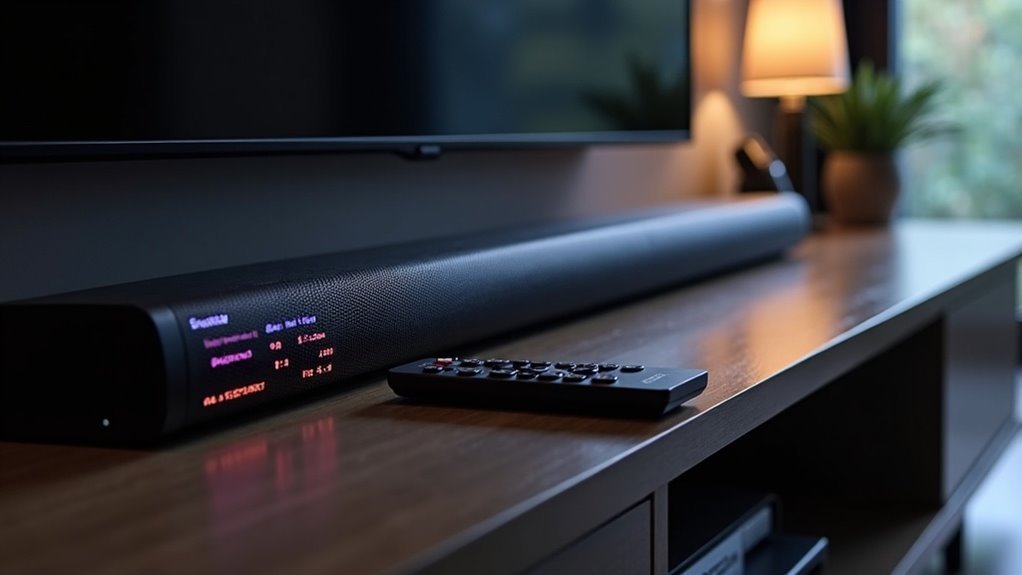
To change your soundbar input names, start by pressing the “Home” or “Menu” button on your remote. Navigate to the “Settings” option, then select the input you want to rename. Look for the “Input Label” feature and follow the on-screen prompts to enter a new name, up to 10 characters long. Don’t forget to confirm and save your changes. If you encounter issues, there are simple troubleshooting steps available to assist you. Discover more solutions tailored for your soundbar needs!
Key Takeaways
- Access the soundbar’s settings menu by pressing the “Home” or “Menu” button on the remote control.
- Navigate to the input settings and select the specific HDMI input you wish to rename.
- Choose the “Input Label” or “Rename Input” option and an on-screen keyboard will appear.
- Enter a new name for the input, ensuring it does not exceed 10 characters, and confirm the changes.
- Restart the soundbar if the new input name does not appear immediately after saving changes.
Accessing the Settings Menu
To access the settings menu on your soundbar, begin by grabbing your remote control and pressing the “Home” or “Menu” button.
Once the menu appears, navigate to the “Settings” option. Here, you’ll find various configuration options, including the essential “Input Label” feature.
This allows you to rename your soundbar’s inputs for easier identification. Select the specific input you wish to rename, and follow the on-screen prompts to enter a new name.
Remember to save your changes before exiting the settings menu to ensure your new input names are applied successfully.
Enjoy a more personalized sound experience with your soundbar!
Navigating to Input Settings
How can you quickly navigate to the input settings on your soundbar?
Start by using your remote control to access the home menu. From there, look for the settings or input options section where input settings are found.
Once you’re in that section, you’ll see a list of available inputs. Select the specific HDMI input you want to change.
It’s here you’ll find an option labeled “Input Label” or “Rename Input.” This is where you can enter your desired input name.
Don’t forget to confirm the changes so the new input name saves and displays correctly on your soundbar.
Renaming Inputs
Once you’ve accessed the input settings on your soundbar, renaming inputs becomes a straightforward task.
Look for the options menu or settings icon that allows for input label customization. Select the input you want to rename, and an on-screen keyboard will typically appear for easy character entry.
You can change the input name to a maximum of 10 characters, making it easier to identify. The changes you make are usually effective immediately, though you might need to restart the soundbar for them to fully register.
This simple adjustment enhances your overall soundbar experience.
Saving Changes
After you’ve entered the desired input name for your soundbar, you need to confirm the change to ensure it’s saved.
Select the [Enter] button to finalize your new input name, making sure it adheres to any character limits, typically up to 10 characters, to avoid errors.
Once confirmed, the new name will immediately replace the previous label on the soundbar interface.
If you don’t see the changes, restart the soundbar to refresh the settings.
Regularly check the input settings, as these names can change, and ensuring they’re saved correctly is essential for a seamless soundbar experience.
Troubleshooting Input Name Issues
If you’re having trouble changing input names on your soundbar, there are a few steps you can take to resolve the issue.
First, verify that your soundbar has the latest firmware update, as certain features may depend on it. If input name options aren’t visible, check if the connected devices need renaming.
Restarting both the soundbar and connected devices can refresh settings and assist with recognition. Don’t forget to consult the user manual for specific instructions, as processes can vary by model.
If problems persist, reaching out to customer support might provide insights into software limitations or additional troubleshooting steps.